Author Archives: Marciam

Testing, Testing, and More Testing

new-ghk-seal-logo-smnRecently I toured the Good Housekeeping Research Institute – the product testing arm of Good Housekeeping magazine. Good Housekeeping issues a limited warranty for products that have earned the Good Housekeeping Seal.  It was fascinating to see how the different test labs are set up to evaluate all sorts of products – ranging from plastic food storage containers to bathing suits to televisions to vacuum cleaners to anti-aging facial cleansers. 

Of course, the area near and dear to my heart is the Test Kitchen, also known as the Food Department.  Among other responsibilities, the Food Department develops all the recipes that are in each issue of Good Housekeeping.  Recipes are tested multiple times – at least three – and they’re tested using gas ovens as well as electric ovens, and are also tested using different brands of appliances and cookware. But the equipment used is what Good Housekeeping readers are likely to have in their homes – not commercial grade apparatus. The Test Kitchen staff also creates and tests recipes for Good Housekeeping cookbooks.  Each recipe takes months to plan, test, and tweak.

There can be surprises.  In response to a recipe contest, “My mom makes the best _____________” readers submitted their treasured recipes.  The Food Department baked a cake from one of these submissions and the cake that emerged was unusually heavy.  Apparently there wasn’t enough sugar in the recipe, and that accounted for the heaviness of the cake.

According to the web site, in a typical month, the Good Housekeeping Test Kitchen buys $2,241 worth of groceries, conducts 142 taste tests, and washes 6,481 dishes.

An interesting tidbit from the web site: The Food Department staff keeps their weight off, not by spitting out the food, but by “eating strategically.” They only taste a few bites of a dish and if they will be tasting desserts, they’ll skip lunch.

After I completed the tour, I wondered: Do all magazine and cookbook publishers perform such rigorous recipe tests?  If so, why do so many recipes not turn out quite the way I think they should?  Before, it was so much easier to blame the recipe.  Now I may need to blame the baker/cook (me!).

Sophisticated and Exotic Chocolate

Aztec chocolate to useUntil very recently sophisticated chocolate referred to single origin chocolate, preferably with a high    percentage of cocoa solids.  Now this single origin dark chocolate seems positively tame by comparison with   some of the more exotic chocolates available today.   

Visits to gourmet chocolate retailers and research online uncovered these more unusual chocolates:

— Raw dark chocolate with banana pieces and cayenne (Antidote Chocolate)

— Raw dark chocolate with pomegranate and acai berry (Gnosis Chocolate)

— Milk chocolate with African rooibos tea and dried cherries (Vosges Chocolates)

— Soft caramels with Kalamata olives (Chocolate Moderne)

— Dark chocolate with lavender and honey (Chocolate Springs)

— Dark chocolate with fig ganache and blue cheese (H.S. Chocolate Co.)


Vosges Cherry to use


 As spicy ethnic flavors become more popular and mainstream, they are also being used to add zing to  chocolate and other desserts.  These chocolates also reflect a greater interest in floral flavors and exotic fruits.   


 Are exotic chocolates here to stay? 


At the Chocolate Show in New York City, I posed this question to a few chocolatiers and here are their responses:


H.S. Chocolate Co.

Overall, people are becoming more adventurous eaters now, so, yes, these sophisticated chocolates are here to stay.  However, while adventurous eaters will keep purchasing these unusual chocolates, there will always be a group of people that has no interest in exploring exotic chocolates.


Chocolate Springs

Yes, they are definitely here to stay.  Dark chocolate and exotic chocolates are viewed as healthy foods.


Eclat Chocolate

Yes, people are always looking for new and different flavors

Get Your Economics Out of My Dessert

A Review of the Book:

An Economist Gets Lunch: New Rules for Everyday Foodies

By Tyler Cowen


The focus of this thought provoking book is on “constructing a better eating experience” by following economic principles – some of which are not so intuitive. 

Mr. Cowen believes:

● You don’t have to spend a lot for good food.  Stick to restaurants where “the owners are chefs are devoted to food they love to prepare.”  He’s a particular fan of ethnic restaurants where the owners and chefs are preparing the foods of their respective homelands.

● “Food is a product of supply and demand, so try to figure out where supplies are fresh, the suppliers are creative, and the demanders are informed.”

●  The quality and taste of American food declined when food production and preparation became so commercialized and efficient. 

While desserts are only mentioned in passing in this book, his principles can surely be applied to the tastiest part of any meal – dessert.

We’ll use cupcakes as an example. Cupcakes, once a treat for children only, are now extremely popular.   A quick scan of the Manhattan cupcake landscape turned up:

● 9 different cupcake retailers, including bakeries whose main products are cupcakes

● 41 different cupcake stores since a few of the retailers have multiple locations

● Numerous bakeries selling cupcakes as part of larger product lines

Interestingly, cupcakes are bi-coastal and international.  One retailer who got its start in Los Angeles has a location in New York and a New York retailer has locations in Los Angeles, not to mention a number of other cities.  Another retailer has a store in Dubai.

While some of these bakeries emphasize their artisan roots, in some respects cupcakes have become mass market products.  (On display in housewares stores are scores of “cupcake paraphernalia” – cupcake images adorn trivets, serving plates, aprons, dishes, and trinket boxes.  What’s more, you can even find cupcake-themed clothing and jewelry.  This writer confesses to owning disposable cardboard coasters with outlined images of cupcakes as well as a gold cupcake necklace.)

What would you expect from the ubiquitousness of cupcakes?  A decline in quality.  What would be the result of still strong cupcake demand from children?  A decline in taste since visual appeal may matter than taste to children.

Has this happened?  Probably.

While the writer has not tried all of the cupcake retailers in Manhattan, she has tried several.  She has found some of them to be OK – the cupcakes are fresh and pretty looking, but the taste is nothing special.  Her favorite cupcake retailer is Buttercup, although she’s not happy that the lemon cupcake was retired.  She enjoys cupcakes (and other baked goods) from Two Little Red Hens.   

Imported Versus Local Baked Goods

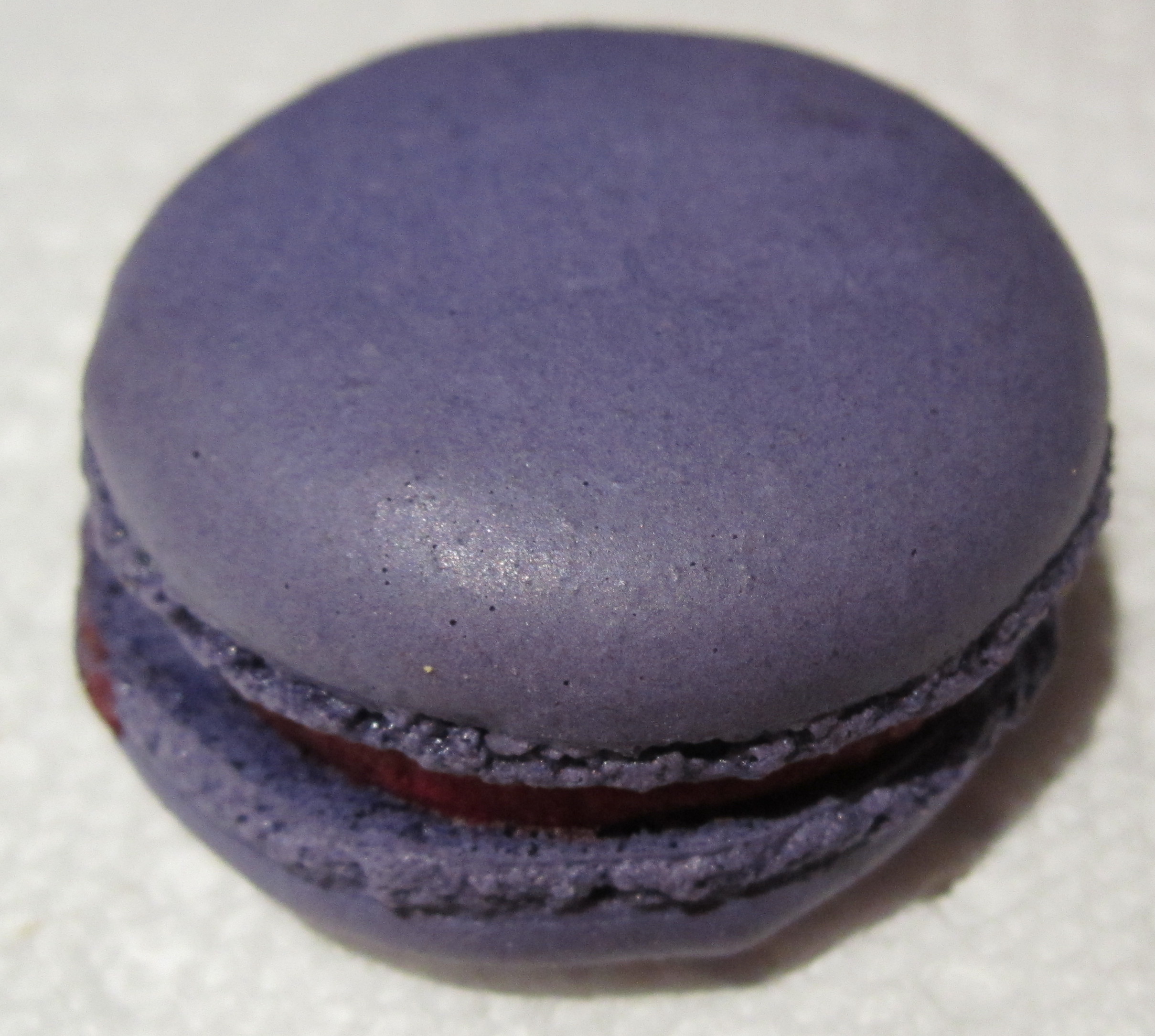
I recently participated in a 92nd Street Y tasting tour of French macarons in Manhattan.  When I wasn’t concentrating intently on the macarons I was sampling, I pondered these questions:

(1)  Bakeries/chocolatiers known for their macarons typically offer a number of different flavors. How do they ensure that all of the varieties are fresh?  Over the last few years, I’ve eaten macarons that regrettably, weren’t as fresh as they could be, and  once, horror of all horrors,  I tasted a macaron that had definitely turned.   

(2) The tour leader, Alexandra Leaf, asked us: From a taste standpoint, which macarons are better?  Those baked in France, flown here while frozen, or macarons baked locally?

Commonsense would dictate that the local macarons would be fresher.  Interestingly, I thought the macarons baked in France seemed fresher.  One of the purveyors, La Maison du Chocolat, seemed extremely diligent about preserving the freshness of their products.  I inquired about having a box of macaroons shipped and they refused; they would not be able to ensure the freshness of their products.   

My analysis:. With macarons, if probably depends more on the skill of the baker and attention to keeping the product fresh than on the location of the baking. 

I’ve also found this to be the case with chocolates.  I frequent a Swiss chocolatier, with retail locations in New York.  Teuscher’s chocolates are made in Switzerland and the products are flown to New York a few times each week.  When I was in Switzerland years ago, I sampled Teuscher chocolates.  (I told myself it was for quality control purposes only.)  There was no difference in taste from those that I purchase at New York stores.

Regarding overall macaron preference: of the four retailers/bakeries, I preferred two – one who imports macarons, La Maison du Chocolat, and one who bakes macaroons locally, Mille-Feuille Bakery and Café.  However, as most of the macaron purveyors in New York City are bakers from France, even the “local” macarons are French.  

I assumed the sole reason for importing macarons would be to ensure the high-quality of the product.  Yet other important reasons can enter into it.  The New York Times quoted the President of Laduree, David Holder as saying: “We make the macarons in Paris for all the Ladurees around the world.  That way we can be sure no one will steal our recipes.” 

Of course, deciding not to purchase imported foods because of the carbon footprint is a separate issue.